Significance of the Original Work in General
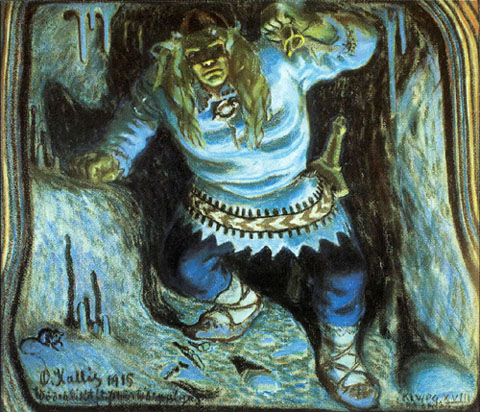
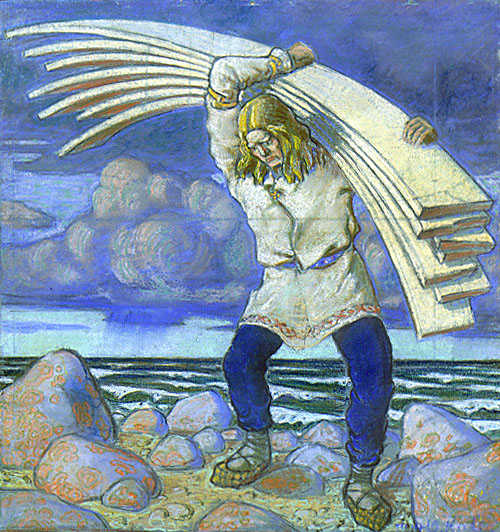
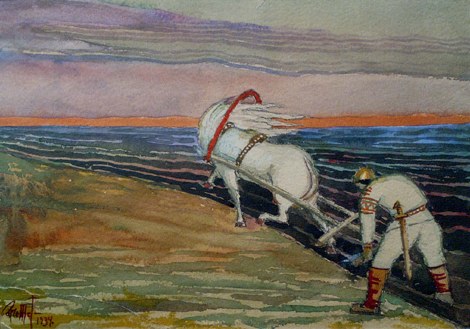
“Laena mulle Kannelt, Vanemuine” (English: “Lend me the Kantele, Vanemuine” – Vanemuine being a term for a wise, primordial figure) is as well-known in Estonia as the first two verses of “Erlkönig” are in German-speaking countries. The mythological and spiritual elements of the epic Kalevipoeg appear everywhere in Estonia as monuments or places of remembrance—whether it be a rock that the mighty hero is said to have hurled at his enemies or a rock formation representing the petrified Linda (mother of Kalevipoeg).
The stories surrounding the complex and tempestuous hero Kalevipoeg were crucial during a time of political and cultural fragmentation to revive Estonian identity and symbolize the War of Independence. The universal, humanistic values that motivated the author F.R. Kreutzwald are central to this.
In recent decades, there have been numerous modern adaptations and reinterpretations of Kalevipoeg. These encompass not only literature but also music, film, theater, and digital formats, aiming to bring the epic closer to a younger audience and solidify its relevance in the modern world. One example is Andrus Kivirähk’s Mees, kes teadis ussisõnu (2007, English: The Man Who Spoke Snakish), which transposes elements of Kalevipoeg into an alternative historical world. In the music world, composer Veljo Tormis, who also combined traditional runic songs with modern music, has left his mark. In theater, Kalevipoeg has been reimagined through stage plays and musicals, often focusing on specific chapters or events from the story.
The complex and innovative lyrical verses continue to be the subject of scholarly research and still inspire both admiration and questions about the original work from 1857.